The Visual Elements of Mind Maps
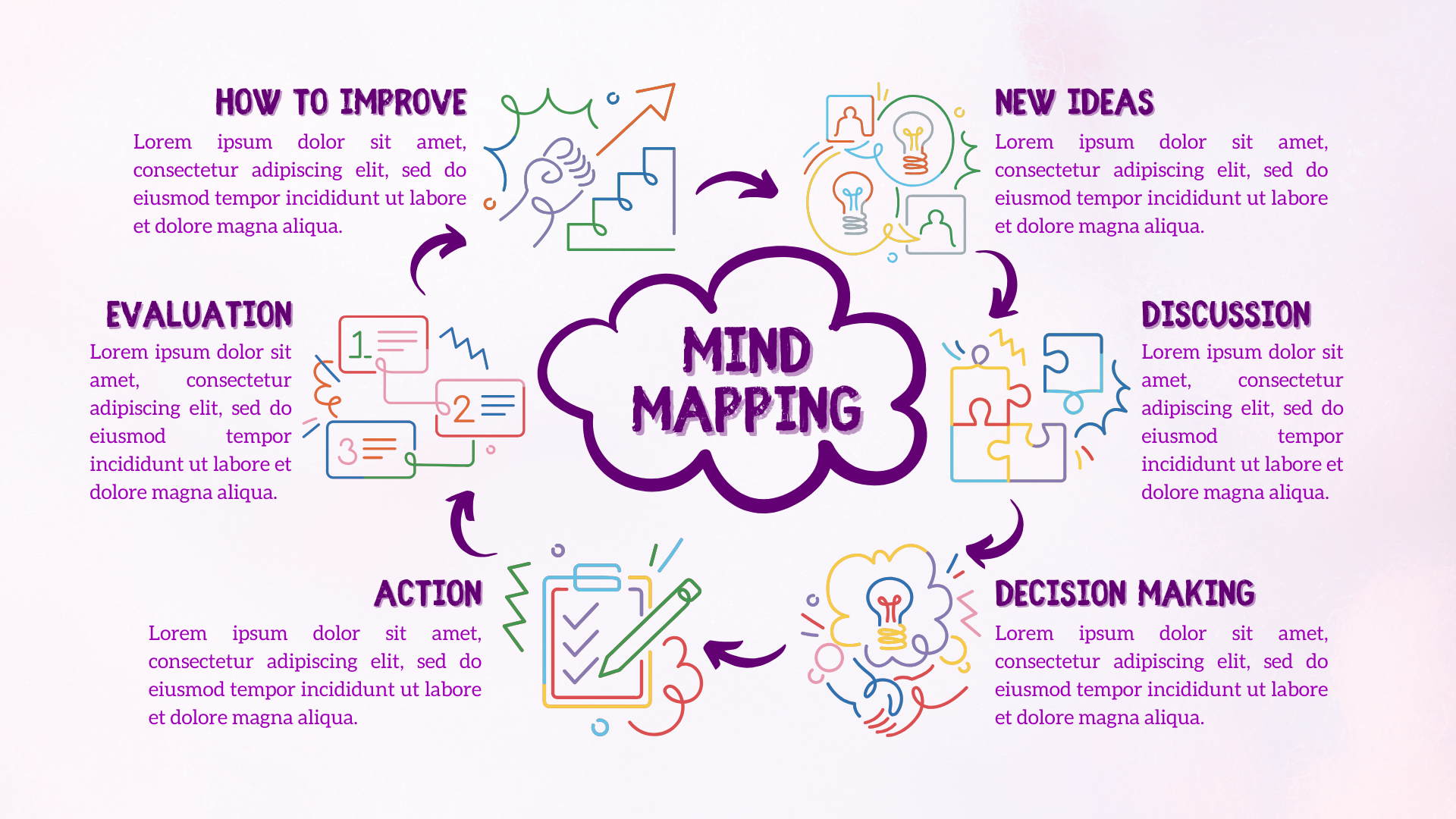
One of the reasons mind maps are such powerful study tools is because of their visual nature. They turn words and ideas into patterns, colours, and images; making information easier to process, recall, and engage with. Let’s explore the visual elements that make mind maps so effective.
1. Central Image or Title
Every mind map starts with a bold visual centre. This is usually a key word or phrase (like “Cyber Security” or “Algorithms”) placed in the middle of the page. Many students enhance this with a simple doodle or image that represents the topic. The central image captures your brain’s attention and anchors all the branches that follow.
2. Branches and Layout
Branches extend outwards from the centre, forming a web of connected ideas. These branches are curved rather than straight, which helps the brain follow them more naturally. Primary branches (for main topics) are thicker and often darker; secondary and tertiary branches get thinner as they branch out into details.
3. Colour Coding
Using colours for different branches or sections helps group ideas visually and improves memory retention. For example, in a mind map on Computer Systems, you might use blue for hardware, red for software, and green for memory. Colour also makes the mind map more engaging to look at and less overwhelming.
4. Images and Icons
Adding small drawings, doodles, or icons alongside words can dramatically increase your ability to remember information. A tiny router for networks, a padlock for encryption, or a clock for time complexity – all give your mind visual hooks to recall details later.
5. Fonts, Size and Style
Varying text sizes and font styles helps emphasise important information. You might use bold uppercase letters for main branches and smaller, handwritten script for sub-points. This variation creates hierarchy and guides the eye.
6. Space and Clarity
Spacing out your branches and ideas prevents overcrowding and makes the mind map easier to read. Leave room between branches so your brain doesn’t feel overloaded.
By using these visual elements thoughtfully, mind maps can transform complex topics into clear, memorable visuals that support active revision and deeper understanding.
